
Naughty Dog On How They Reached 60FPS In TLOU Remastered
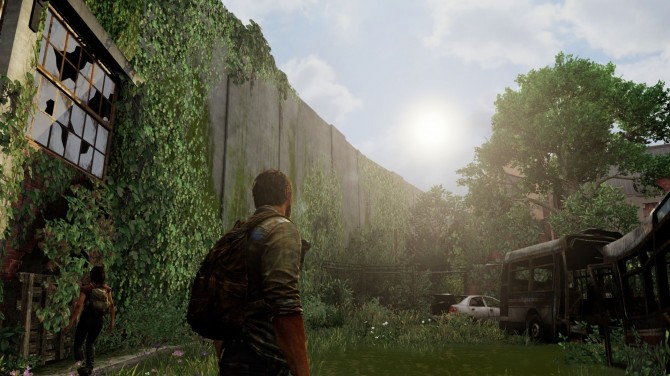
I’m pretty sure that some gamers think Naughty Dog just pulled a switch in order to port TLOU Remastered on PlayStation 4, automatically getting 60 FPS since PS4 is much more powerful than its predecessor.
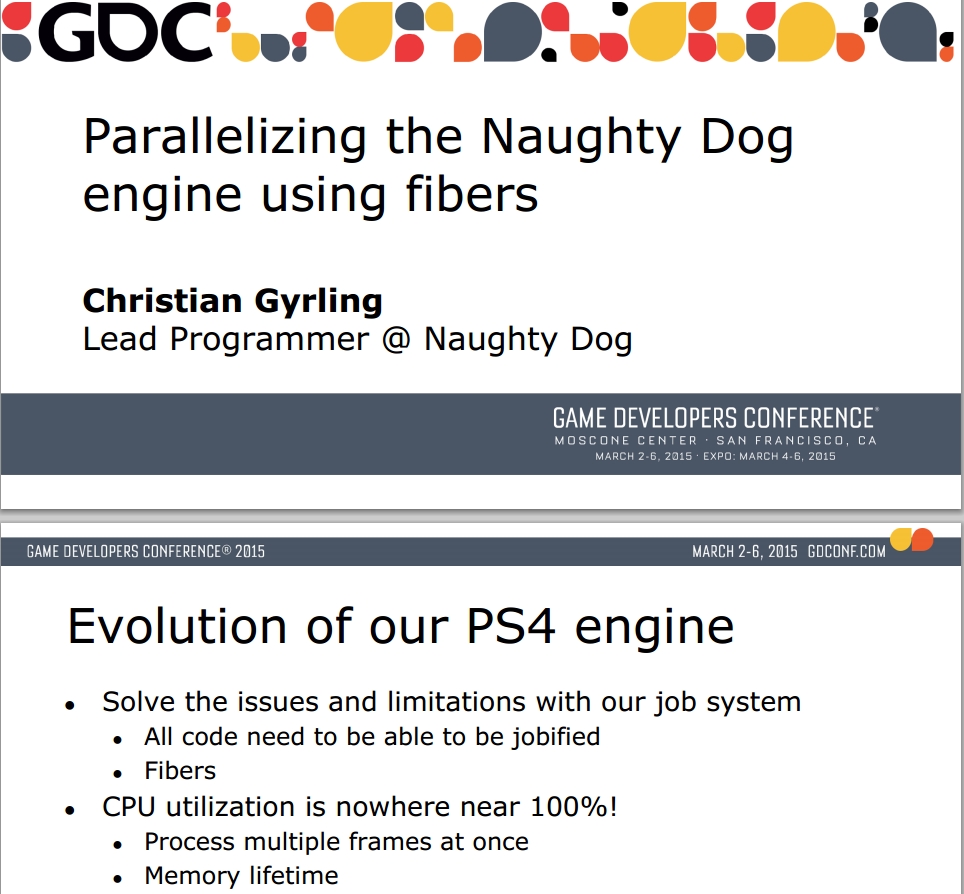
It turns out that this couldn’t be further from the truth. Naughty Dog actually had to rewrite significant parts of its engine since PlayStation 3 had a different architecture, and they decided to parallelize the engine through fibers. Naughty Dog’s Lead Programmer Christian Gyrling explained the process in a talk at GDC 2015 and today, he made the slides public (in this 94 pages long .PDF file).
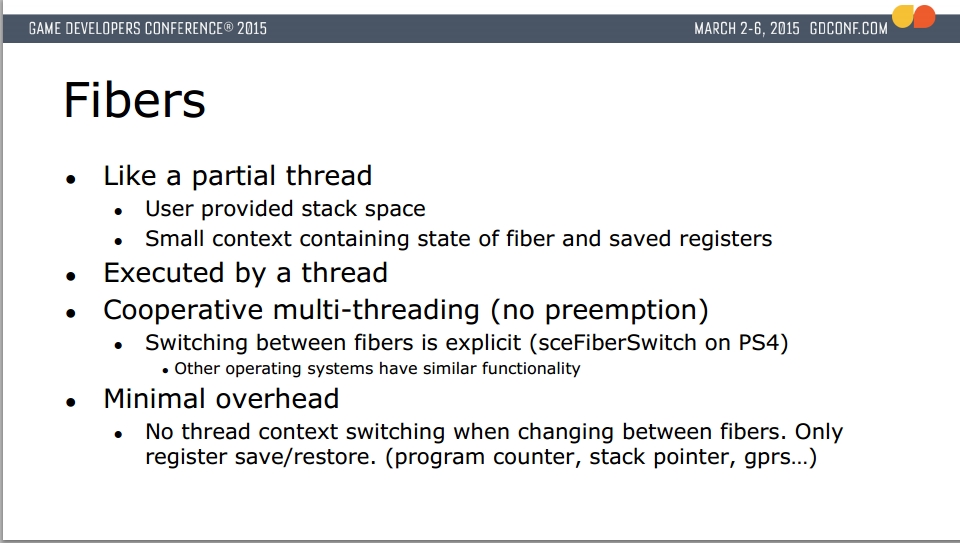
Fibers are like a partial thread and they have very minimal overhead, according to Gyrling.
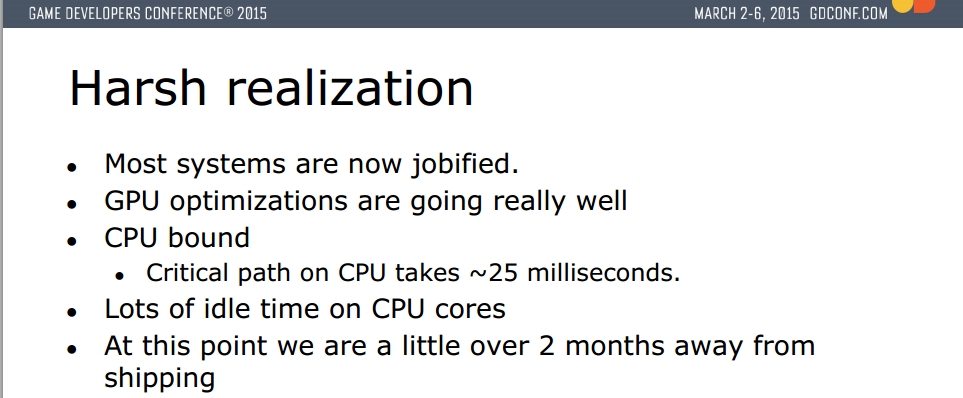
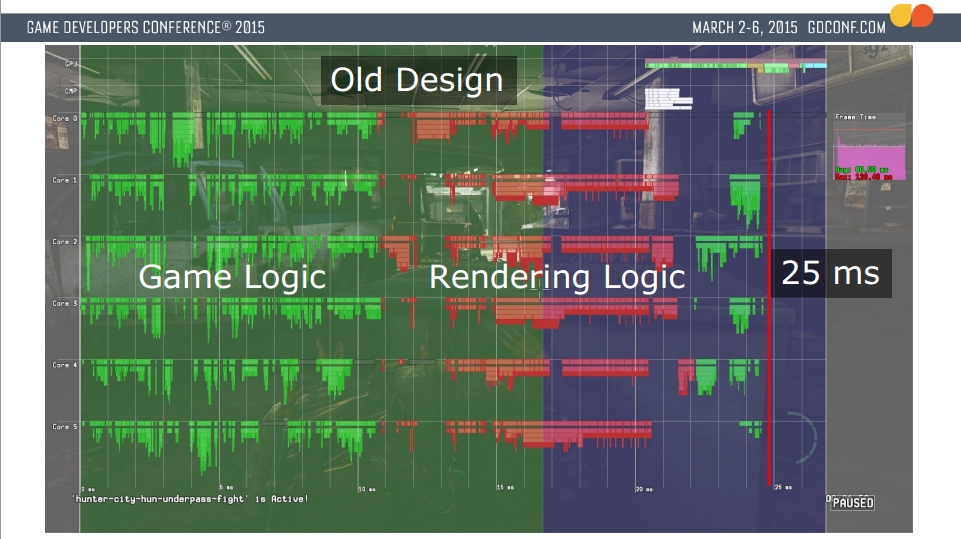
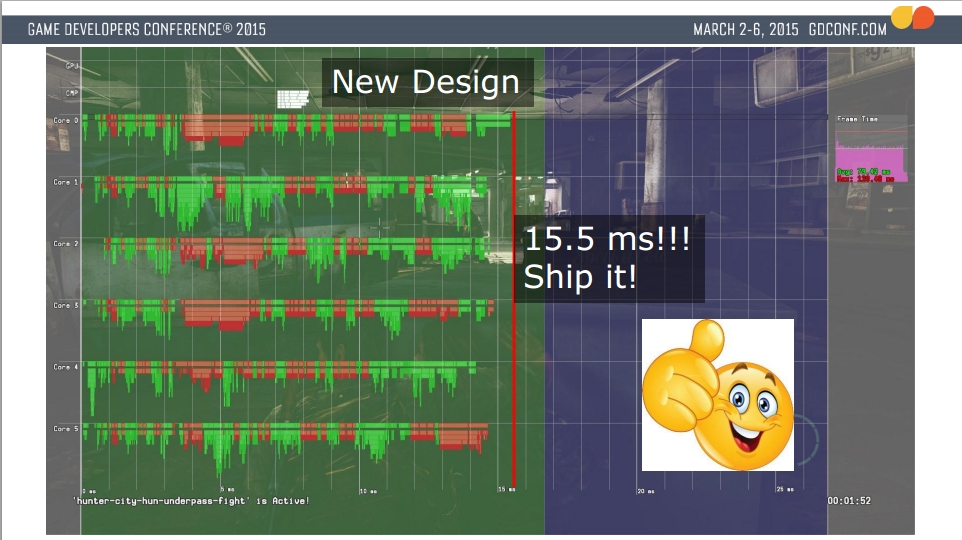
Still, they realized a little over two months before shipping the game (TLOU Remastered released in July 2014) that they would need to change something in order to reach 60FPS as promised. The critical path on the CPU needed to be lowered from 25 ms to 16 ms or less.
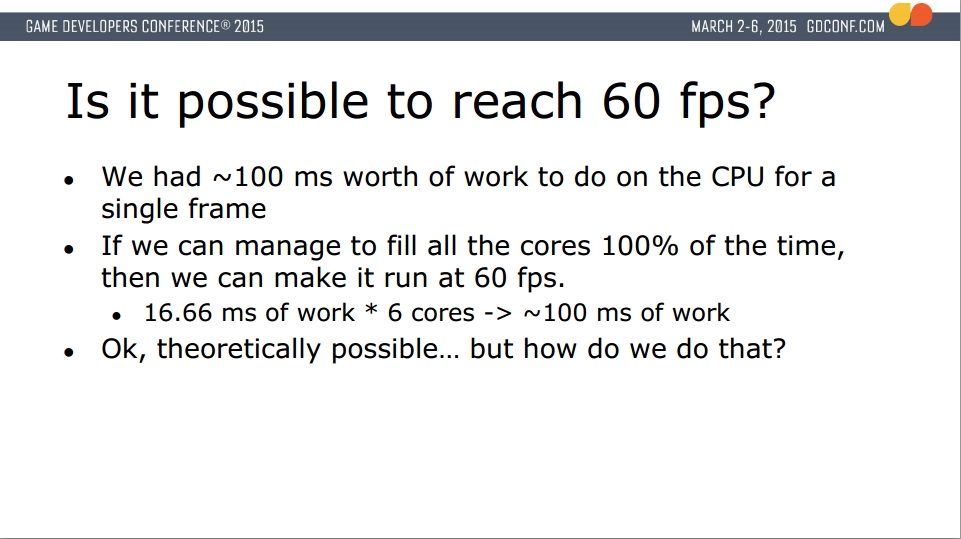
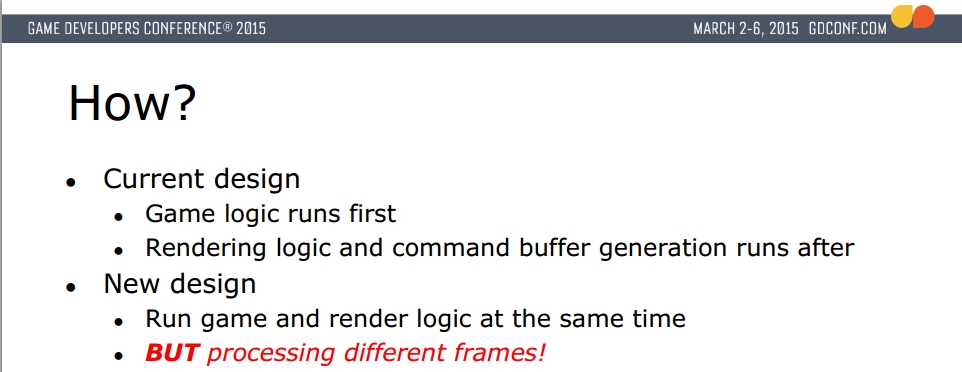
The studio decided to move to a frame centric design, with game logic and render logic running at the same time but processing different frames; this lowered the CPU critical path to 15.5 ms, thus fulfilling the requirement to reach 60 FPS.
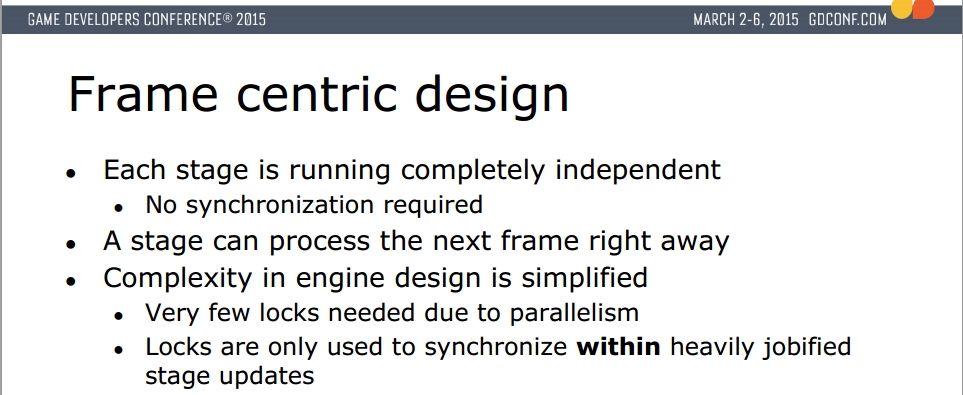
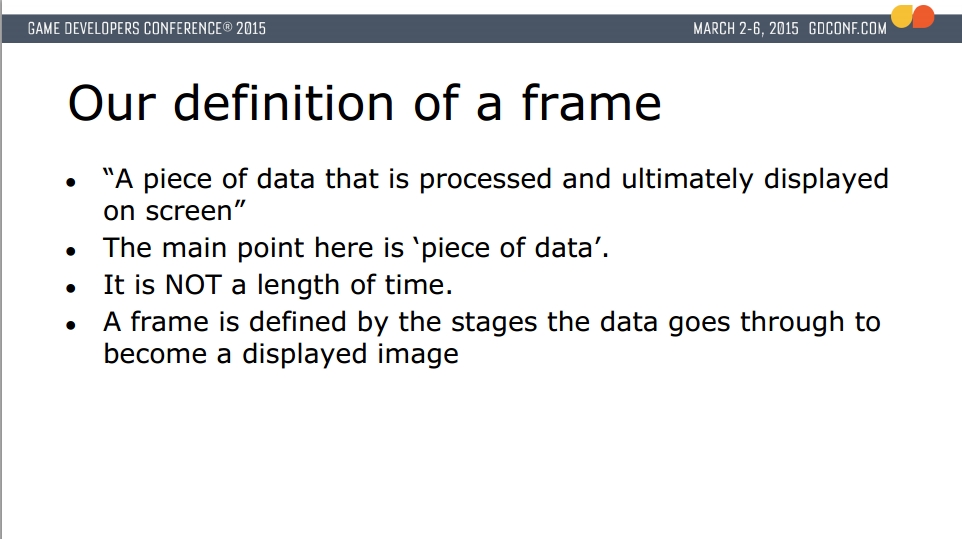
Gyrling also made sure to clarify what exactly Naughty Dog intends for “frame” in a dedicated slide.
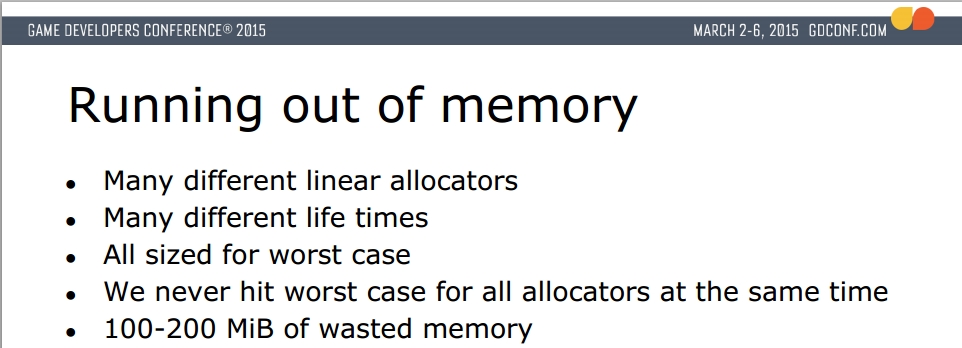
Finally, it was explained how they never had any memory issue with this approach (with even 100/200 MiB of wasted memory).
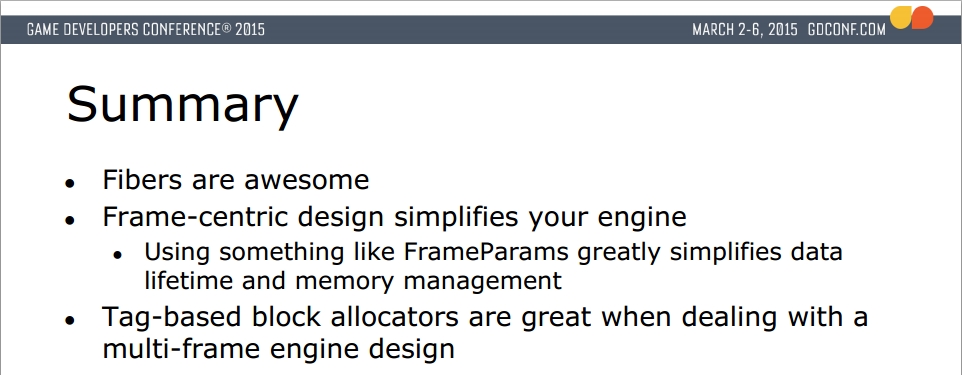
Gyrling’s conclusion is that fibers are awesome and a frame-centric design can simply an engine.
Naughty Dog has previously commented that porting TLOU Remastered on PlayStation 4 will be helpful for Uncharted 4, scheduled for release in late 2015, and now we can understand why. Their engine needed to be adapted to PlayStation 4’s architecture and now that it has, I can’t wait to see what they can really do on their first true PS4 game, Uncharted 4: A Thief’s End.