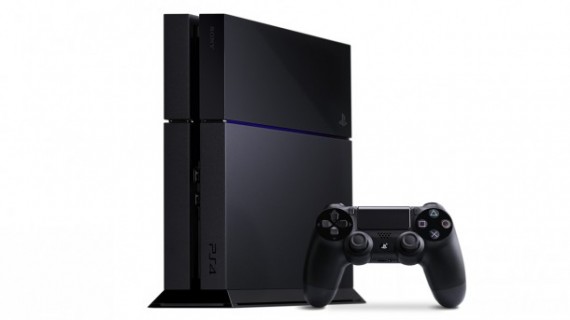
As you all know, after two generations with AMD and NVIDIA providing each the GPU for Microsoft and Sony consoles (the latter provided the chip in the Xbox and PS3, the former provided the chip for Xbox 360), this time both Microsoft and Sony are using the same chipset designed by AMD - an APU, a microprocessor designed to act both as CPU and GPU on a single chip. PlayStation 4 and Xbox One are both powered by 8-core semi-custom Jaguar derived APUs, although there are a few differences here and there.
The main takeaway for the purposes of this article, though, is that AMD completely monopolized the console scene (they also designed WiiU‘s “Latte” GPU, by the way). Since we know that the console market traditionally has a strong control over most of the development scene (it’s where most of the revenues come from, after all), AMD is trying to extract the benefits of having engineered PlayStation 4 and Xbox One with Mantle, a low level API that will supposedly enable developers to exploit the full power of AMD GPUs on PC much like they do on consoles, reducing overhead especially for the draw calls.
After this news, it was clear that NVIDIA had to retaliate. With a press conference entitled “The Way It’s Meant To Be Played” hosted in Montreal, we can say that the GPU market leader delivered in spades not only against AMD, but also against the threat represented by the impending launch of the new consoles. There were several announcements over two days, starting with the GameWorks program, which is meant to empower game developers through a series of tools, algorithms, libraries and technologies. Over 300 visual engineers are working with game developers to optimize their games (mainly for NVIDIA hardware, of course), and NVIDIA announced some of their new fancy tools - the first one is called FLEX, a unified GPU PhysX system which enables the seamless blending of rigid body and fluid simulations.
Another interesting one is GI Works, which is a real time global illumination solution that’s supposed to significantly reduce the time developers usually spend pre-baking global illumination effects in their scenes. Similarly, Flame Works is supposed to finally introduce film-quality volumetric fire and smoke effects in games.
The best, however, was yet to come. Leveraging the streaming technology already available between PC and their portable SHIELD device, NVIDIA announced GameStream, which will allow gamers to connect the HDMI-out port of SHIELD to whatever TV they have in the house and stream their PC games over there. This will especially come in handy if you have a big TV in the living room and you want to experience PC games over there, mimicking the functionality of the recently announced PS Vita TV.
Immediately after, NVIDIA finally confirmed the launch date for their Shadowplay technology, which again levels the playing field with the next gen hardware in terms of recording and sharing. In fact, exploiting the H.264 encoder available on GeForce 600 cards and onwards, Shadowplay will produce 1080P@60 fps footage at a minimal hit performance (around 5-10%) with a considerably reduced output file size, since it’s automatically compressed.
Even more, with Shadow Mode it’ll be possible to save the last 20 minutes of gameplay (maintained in a temporary buffer) simply by hitting Alt+F10. Did you just dominate the last TDM round? Well, just hit the buttons and the video will be ready either for upload to YouTube or for further edit with dedicated video software such as Sony Vegas or Adobe Premier. Additionally, it was announced that in a later GeForce Experience update players will be able to stream directly to Twitch.
The biggest announcement was saved for last, as usual in these events. After years of research, CEO Jen-Hsun Huang proudly lifted the veil on G-SYNC, a revolutionary technology that promises to fix once and for all the inherent display-GPU problem.
If you’re a PC gamer, chances are you’ll have noticed the V-SYNC option in games settings. The issue is pretty simple: displays so far have had fixed refresh rates (60hz, 120hz, etc.), but video cards don’t render at fixed speeds. This automatically means that either you activate the V-SYNC option, which tries to pair the GPU with the monitor but consequently introduces stuttering and input lag, or you suffer from tearing - the weird line that happens whenever a single refresh cycle has two different images. There was no other way but to choose between two equally heinous evils, bad image quality or bad performance/responsiveness, at least until G-SYNC.
NVIDIA found the solution in reversing the communication process - it will be the monitor’s task to synchronize to the output of the GPU, thanks to the G-SYNC module built or added into the monitor. If the GPU is currently rendering at 55fps, the monitor will be at 55hz, thanks to the now variable refresh rate. This will eradicate the issue at the very source, eliminating any kind of tearing or stuttering and considerably reducing input lag. The implications of this are much larger, though: whereas previously even powerful GPUs delivered less than optimal smoothness whenever the frame rate dropped below 60fps due to stuttering, that peculiar frame rate window between 30 and 60 fps should be a lot more enjoyable.
This is a kind of technology which, similarly to 3D Vision, has to be experienced in person; however, so far every single comment from the press that was attending the event and those in the industry who have already tried it suggests that G-SYNC is a major breakthrough, the likes of which are rarely seen. Not to mention that three of the most respected programmers in the gaming industry were on stage to endorse the technology: John Carmack (id/Oculus VR), Tim Sweeney (Epic Games) and Johan Andersson (DICE) spoke with enthusiasm about the important advancements brought by G-SYNC.
Let me damp your excitement a little bit, now. First of all, the minimum GPU required will be the GeForce 650Ti Boost; secondly, as mentioned before, chances are you’ll have to change monitor, since currently the only monitor that can be modded with a DIY (do-it-yourself) kit is the Asus VG248QE. More compatible monitors could be announced at a later date, but for now the only way to get G-SYNC will be to buy a modded Asus VG248QE from a modding firm later this year.
Starting from next year, however, new monitors will be built with the technology and bought at retail; NVIDIA mentioned that giants like Asus, BenQ, Philips and ViewSonic already accepted to be on board. Obviously, as with all new technologies, G-SYNC will be enjoyed by enthusiasts first (the standalone module should cost around $175, although an NVIDIA rep commented on Neogaf that they are trying to bring the price down to $130), but if the reports are to be believed then it will be soon a new standard.
Getting back at the title of the article, NVIDIA might have just rendered next generation obsolete before they even ship with G-SYNC, since Sony and Microsoft have no conceivable way of introducing such a technology before the next console cycle (that is, PS5 etc.); PC users with NVIDIA cards (AMD might have something like this in the works or not, right now it’s just speculation), however, will start enjoying games with reduced input lag and no stuttering/tearing in just a few months, whereas console gamers might have to wait an entire generation.
Here at Worlds Factory we can’t wait to get our hands on G-SYNC; look forward to a test article as soon as it becomes available.