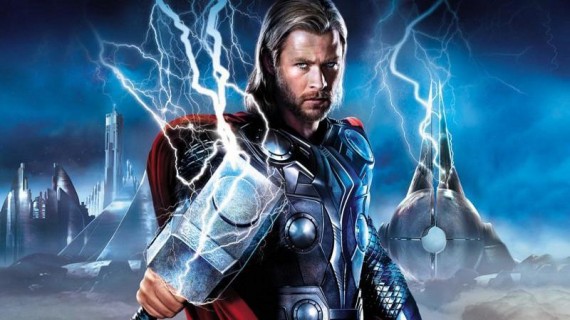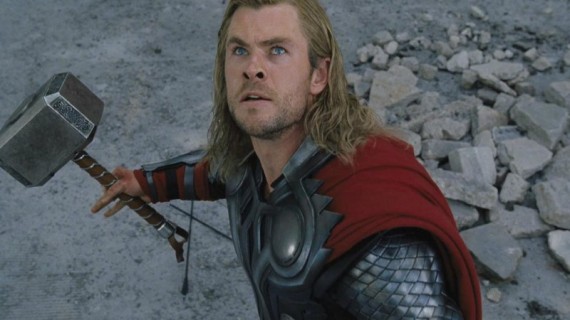
Asgard is back! Two years after the release of the first chapter in the adventures of the God of Thunder, Thor comes back in theatres with his first direct sequel. This year we had already seen two superhero sequels from Marvel, Shane Black’s Iron Man 3 (ninth highest-grossing movie of all time) and James Mangold’s The Wolverine, two film limited in the second phase of Marvel Studios. In fact, after The Avengers (third highest-grossing movie of all time), Marvel Studios continues on the planned roadmap that will eventually lead to Avengers: Age of Ultron, the last movie of “Phase Two”.
But today the question is, how’s Thor: The Dark World? Well, it isn’t perfect, far from it, but it’s definitely decent.
The first movie about Odin’s son was controversial. Many people didn’t quite get the strange setting envisioned by director Kenneth Branagh (who also starred as an actor in Harry Potter and the Chamber of the Secrets) that transposed on the big screen part of the Shakespeare’s piece. The film had a large underlying problem precisely because of the director, as he transposed his theatrical experience directly into the seventh art. Thor can be considered like a theatrical movie, because every aspect was emphasized in excess, becoming unintentionally ridiculous. Despite that, Thor still wasn’t the worst movie of Phase One, because for all of its ostentation the offhand and tacky patriotism of Captain America: The First Avenger was still worse, at least in my opinion.
The direction for this sequel has been passed to Alan Taylor, mostly known as a sort of little-screen star, since he directed some episodes of highly acclaimed TV series like The Sopranos, Mad Men and Game of Thrones. The director makes a modest restyling of places and characters to enhance the film’s realism (sometimes a bit out of place, since the story is about the adventures of a god who flies through a hammer), and at first this seems to be the winning formula. In the long run though, his desire for an epic movie seems a bit inappropriate, because it isn’t required by the story and the genre. Even if the protagonist comes indeed from the Norse myths, let’s not forget that they are deformed according to the filter of Marvel, then all the symbols and the depth of the base are sacrificed in the name of the easy - way to use. So do not expect a coherent transposition, because terms like Valhalla and Yggdrasil are cited only for their coolness factor.
Luckily the script, written by Christopher Yost, Cristopher Markus and Stephen Mcfeely, while not offering a particularly innovative plot knows how to defuse without excessive stupidity the darkest moments. This touch of irony allows the film to not take itself too seriously and ultimately I believe it’s for the best. Of course there are the various inconsistencies in the plot, but it should be remembered that this is after all a movie based on comic book characters, and as such complete seriousness isn’t actually required. The only things that can really be criticized, however, are the very little faceted villains who turn out to be much less attractive than the more consolidated Loki.
It can be argued that special effects are the true protagonist in Thor: The Dark World. They’re really well made and realistic; costumes and locales are also positive highlights of attention to detail.
There’s not much to say about the cast. Chris Hemsworth has really maturated in these years, but Tom Hiddleston still managed to steal him the scenes a few times. Natalie Portman isn’t really very inspired, and Kat Dennings is lovably auto-ironic but she is not much exploited.
Stellan Skarsgård (soon in theatres again thanks to his appearance in Lars Von Trier’s Nymphomaniac) is even more hilarious than his usual self as Erik Selvig, and Anthony Hopkins with the mere presence makes the entire movie more authoritative.