Samsung Electronics ( SSNLF ) published a mixed set of preliminary results for Q4 2015 on Friday, indicating that its operating profits likely grew by about 15% to 6.1 trillion won ($5 billion) with sales remaining almost flat at about 53 trillion won ($44 billion). Although Samsung did not provide specific details of what drove the numbers, it's likely that it benefited from higher shipments of mid-range smartphones as well as better semiconductor foundry sales. In this note, we review some of the possible drivers of the earnings and also look at what lies ahead for the company going into 2016.
See our full analysis for Samsung Electronics
Trefis has a $1,220 price estimate for Samsung , which is about 20% ahead of the current market price.
Mid-Range Models. Price Cuts Likely Drove Smartphone Sales
Samsung's smartphone profits are likely to have edged higher, driven by higher shipments of mid-range smartphone models. Shipments are likely to have risen by at least 10% year-over-year for the quarter. Samsung operates in a crowded Android smartphone market (80%+ OS share), where product differentiation is very weak. The company has been facing intense competition from Chinese value vendors, which are making headway in the low end of the market, as well as Apple, which has been cornering the top end. However, Samsung has shown a willingness to compete on price, trading off ASPs and margins in favor of higher volumes. For instance, in mid-2015 the company cut prices on its flagship Galaxy S6 devices, while promoting its cheaper, well-specified Galaxy A and J series smartphones. During Q3 Samsung said that average selling prices for its devices fell to between $180 and $190, and it's likely that the number remained at similar levels through Q4 as well (related: How Samsung's Smartphone Business Could Get Back On Track ). Overall, we see 2016 as being a tough year for the smartphone business amid economic headwinds in China and slowing smartphone sales growth (projected at single digit levels).
Foundry Operations Possibly Helped Semiconductor Business
Samsung's semiconductor business likely performed better compared to last year on account of stronger foundry sales and higher shipments of value-added memory products. Samsung has ramped up production of its 14-nm process, which has helped it win business from Apple (for the iPhone 6S) as well as other fabless semiconductor players. According to analysts surveyed by Bloomberg, semiconductor operating profits and sales likely rose by roughly 20% each to 3.3 trillion won and 12.7 trillion won, respectively. However, the outlook could be more challenging going into 2016, amid slowing global smartphone growth, which is likely to hamper sales of components including displays, logic chips and memory. Even Apple, the largest smartphone manufacturer by revenue, is reported to be trimming orders with suppliers, after nearly eight straight years of growth. Separately, the memory business is also likely to face headwinds amid increasing supply and plummeting prices. While Samsung should be able to weather a downturn better compared to other memory players, on account of its process technology advantages and scale, earnings could take a hit as memory accounts for 70%+ of its semiconductor revenues.
View Interactive Institutional Research (Powered by Trefis):
Global Large Cap | U.S. Mid & Small Cap | European Large & Mid Cap
More Trefis Research
The views and opinions expressed herein are the views and opinions of the author and do not necessarily reflect those of Nasdaq, Inc.
Thank you for your interest in licensing Fortune content. Please find information on various licensing contacts below and choose the one that best suits your needs:
- 1. To license Fortune articles, excerpts, or headlines for republication in various media (including books, eBooks, film, web, newsletters, newspapers, magazines and others), please email [email protected].
- 2. To license a Fortune cover, order reprint or e-print copies of an article or cover, or license an accolade, please contact PARS International at www.timeincreprints.com.
- 3. To license text only photocopies of Fortunearticles as print or digital handouts in academic settings, or in academic coursepacks, please contact the Copyright Clearance Center at www.copyright.com


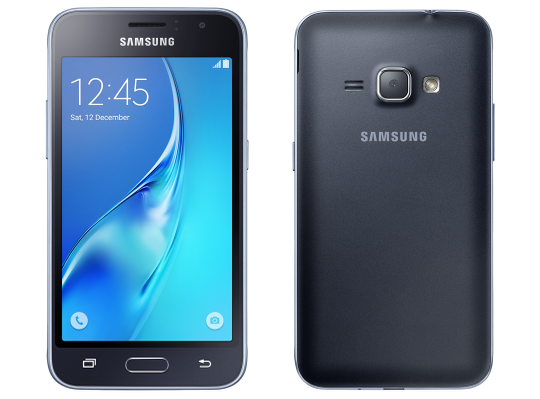
At the end of last year, the first legitimate-looking leaked images of the Samsung Galaxy J1 (2016) surfaced, along with some spec details. The device would feature a display slighter larger than the original 2015 variant, along with a somewhat new front design language for Samsung. Today what appears to be full-on press renders have surfaced, courtesy of veteran leaker Evan Blass, perhaps better known by his Twitter handle, @evleaks.
Based on previous leaks, it seems the device, which spec-wise should be rather wallet-friendly, will feature a 4.5-inch display of 480X800 pixels, an Exynos 3457 SoC with Mali-720 graphics, 1GB of RAM, a 5-megapixel rear camera and 2-megapixel front camera, and ship with Android 5.1.1.
Based on the specs, it can also be assumed the device will not have an AMOLED display but instead opt for LCD, will not have back-lit capacative buttons, will not have an embedded fingerprint sensor. The display has been increased from the 4.3-inches of the original Galaxy J1, however the resolution has not. RAM has been increased, from 512MB to 1GB. The SoC and GPU have also been increased over their original, and – assuming the original leak was legitimate – Samsung is apparently going to be putting its own silicon inside.
The key take away here, aside from the aforementioned screen size increase, is the clear redesign that Samsung is going for with the front of the phone. Whereas the Galaxy series has always made due with single color front faces (light patterns aside), the Galaxy J1 (2016) is clearly opting for a two-toned approach provided the White or Gold variants are considered.
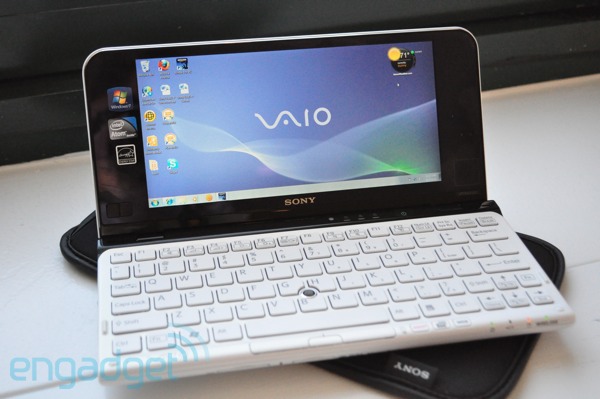
Notice how the black boarder around the display actually extends to the earpiece on top. This is an almost playful, fun look which serves to elevate what might otherwise be seen as a standard-affair budget product into something that looks more visually stimulating. As was mentioned in the original leak post, the approach almost makes one recall the second generation VAIO P that Sony released a number of years back:
At the moment it is unclear as to when Samsung plans to formally announce the new Galaxy J (2016) series. Given today’s new leak, it would appear press materials have already been prepared – at least somewhat – and as a working model has apparently already been photographed, it might be safe to believe sometime within the next few weeks would be the proper timing. At the very least one might expect Samsung to make a move before the formal unveiling of its new Galaxy S7 and Galaxy S7 Edge, now widely believed to be unpacking in February and possible hitting China in March.
On a final note, given that the 2015 Galaxy J series gave birth to several size variants, it is likely Samsung will have at least one other installment this year as well. The question is what size it/they may be, as this J1 is now larger than its progenitor: so too would a Galaxy J5 be as well? Only time will tell!
We’re interested to hear what you think! Does the Galaxy J1 (2016) look like a winner? Would you be interested in seeing this design language used on more Samsung devices in the coming months? Does the two-tone front remind you of a different product? Please leave your comments below and tell us!