
Betrayer Review - Just Missing A Few Colors
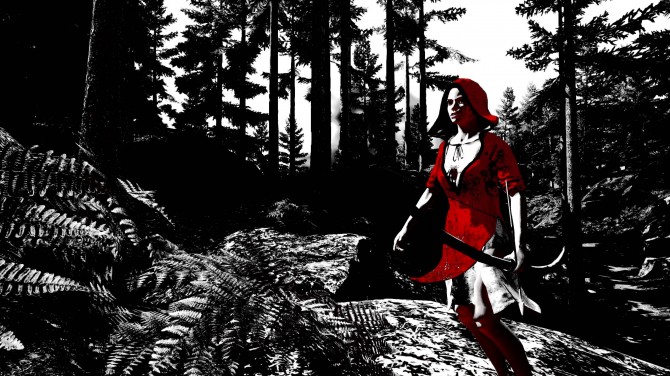
You wake up on a beach in colonial America after having survived a shipwreck. The whole world is painted in black and white and all you hear is the sound of waves crashing and birds chirping in the distance, yet, something feels off. As you venture inland you start finding clues and other odd hints that something is not quite right: Spanish troops roam the lands making animal-like growls and attack you on sight, a whole town is left deserted with its inhabitants turned into ash, and the only other friendly person you meet seems to see a different world. Yes, something is not right indeed.
Betrayer is a first-person horror/adventure game developed by Blackpowder Games, a studio mostly comprised of ex Monolith employees famous for their work on titles such as F.E.A.R.
It’s hard to describe what Betrayer truly is, because there is no game quite like it; it’s a first person game with some shooting, horror, RPG and adventure elements all blended in. It’s all of these genres and none of them, making it a very unique experience. What makes it more unique is its visual style; the whole game is in black and white, with red being the only color that you can see, and stands out like a sore thumb. Whilst an option to play the game in color is available, and it does make Betrayer a little easier on the eyes, it is definitely more immersive to play it in black and white unless you really can’t stand it.
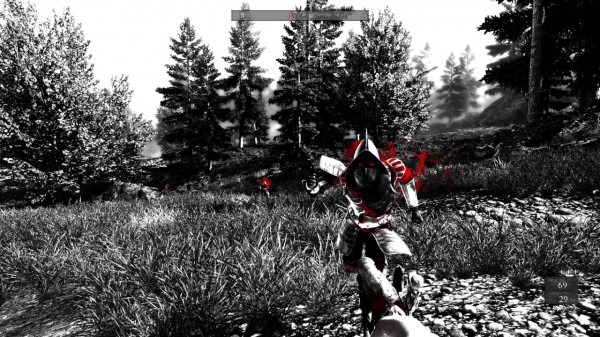
From the very first moments of Betrayer, you are never told what you should be doing. Instead of having an arrow pointing you the right way or a quest tracker appear on your HUD, the only thing keeping you on track is sound: by pressing X, your character can listen for eerie voices and sounds which lead you to the next objective. In addition to that, sound plays an important role throughout the entirety of the game; a light jingle means a treasure chest is nearby whereas animal-like sounds means that a Spanish soldier is patrolling the area. This is one of those games you want to play with headphones on and with the volume up; you’ll want to be able to hear everything you possibly can.
Not before long, Betrayer has you switching between two worlds, the Light world and the Dark world, in order to progress and find out what the hell is going on. In the Light world you fight Spaniards, interact with humans and collect more loot whereas in the Dark world you interact with ghosts, fight skeletons and find less loot. You’ll need to jump between the two often in order to unlock the other areas of the game as well as to find out important clues and information about the game’s story. It’s a fun mechanic which makes the rather small areas feel much bigger because you see them under two completely different lights, quite literally, and as a whole this makes the world built by the devs way more spooky. Unfortunately, like almost everything else in Betrayer, this gets old quite quickly.
The first few hours of the game are really good; I had a lot of fun investigating the creepy and tragic stories behind the deaths of some of the land’s inhabitants and following the sounds to my next objectives but, after about the second area of the game, these novelties quickly wear off. Even the atmosphere and encounters with the enemies start feeling more like tedious battles instead of the tense and frightening experiences they are meant to be. Early on in the game, I was scared when I heard the twisted sounds of the Spaniards, I tried to avoid confrontations and the game’s world genuinely felt creepy and uncomfortable.
These feelings, however, quickly vanished after just a few hours. Confrontations don’t feel as threatening, the world starts feeling familiar and less creepy and Betrayer is revealed as extremely repetitive. At the end of the day, all you do is go to the noise, pick up the clue, report back to the quest-giver, switch worlds, repeat. There are a few curve-balls thrown here and there, but they don’t feel different enough to keep your attention.
This is a real shame, especially since I was really enjoying the game at the start. It’s nice to see a game try many different things, I love the black and white style of Betrayer, I loved the story and the emphasis the game put into sound and small visual cues; however, it doesn’t do enough with these mechanics to make them feel relevant throughout the duration of the game. It’s hard to recommend the game at its current price but, when the inevitable sales start rolling out, Betrayer is well worth a look. The whole game takes about 6 hours to beat, more if you are more keen on exploring and uncovering everything there is.
Personally, Betrayer started to feel more like a chore during the last few hours than anything else but, if you feel like you can endure a few hours of repetitiveness, the game offers enough to make it worth your while.