
Hannah Arendt Review - The Loneliness of Truth
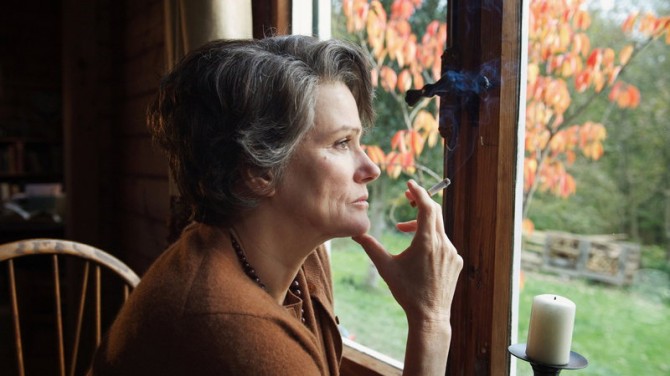
Creating a movie out of the life of a great thinker is never an easy job: when the greatest goals achieved are the mind’s ones, and the most meaningful victories are the ones against oneself and common sense, it’s hard for a movie to even scratch the surface of the incredibly complex topic. Margarethe von Trotta, director, thinker, avantgardist, feminist activist, didn’t just accept the challenge, but she chose one of the most solid and notable female personalities of the last century, that Hannah Arendt who analyzed the origins of totalitarianism, searching the meaning of evil and violence; who tried to unite Heidegger’s idea of pure thought with a deeply political sensibility.
The movie starts in Buenos Aires, 1961: the fugitive ex-Nazi Adolf Eichmann is found and abducted by Mossad, then led to Jerusalem to face trial for the crimes he committed during Second World War. Meanwhile in New York, renowned philosopher and appreciated university professor Hannah Arendt decides to attend Eichmann’s trial, acting as special correspondent for the New Yorker. Once in Jerusalem, it seems that only Arendt realizes how much the atrocities of Eichmann’s crimes clash with the absolute mediocrity of the man: this thought is eventually expanded by Hannah in the book A Report on the Banality of Evil, a text that quickly creates a lot of enmity towards her.
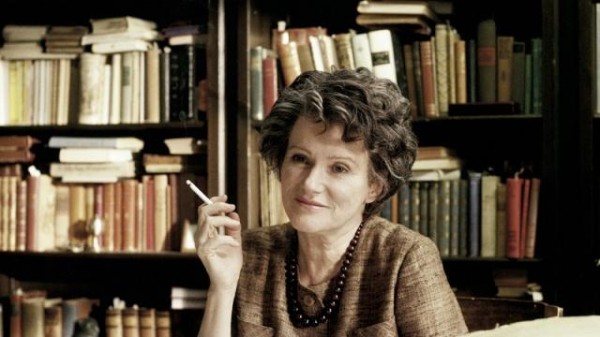
Von Trotta focuses on the early 1960s, when Arendt dared to assert, at that time alone in the cultural and academic world in both USA and Europe, that Nazism wasn’t the result of incredibly deep cruelty of its associates. Their actions are instead linked by Hannah Arendt to the blind and uncritical obedience to law and orders, causing a slumber of reason that, according to Goya, gives birth to monsters. Very far from any kind of rhethoric, feminist or otherwise, von Trotta directs an extremely effective biopic, that thrills with the mere strength of the protagonist’s dialectic and that entrusts everything to the main character, whose certainties and genius make any artificiality in storytelling more than unnecessary.
Barbara Sukowa portrays a very human Arendt, a woman who crosses history with the loneliness of those able to read underneath the surface. She tries to cling up to family’s and friends’ affection, but finds herself ultimately isolated among her peers, as the bringer of an uncomfortable truth clashing with the so called “politically correct”; her colleagues simply don’t want to acknowledge it. Around her, some of the most important and influent characters of an entire era appear in the movie: the master and lover Martin Heidegger (Klaus Pohl), the husband and poet Heinrich Blücher (Axel Millberg), the colleague and friend Hans Jonas (Ulrich Noethen), the friend and writer Mary McCarthy (Janet McTeer), journalist and editor William Shawn (Nicholas Woodeson), sionist Kurt Blumenfeld (Michael Degen, whose character is a fusion between Blumenfeld and the philosopher of history Gershom Scholem).
The search for truth is never an easy task, especially in an era that re-writes its own history at the momentary winner’s complete advantage, omitting and adding, driven by a manichaeistic impulse to demonize the enemy; Arendt’s figure, in this sense, is still a living matter, and von Trotta manages to underline the most problematic aspects, both the inner conflicts and the political ones, without idealizing the person. A real woman is portrayed instead, with all of her contradictions and her strengths, her piercing reason and her emotions which she never could, or would, put aside.