
Dragon Ball Z Battle of Gods Review-Son Goku Returns
It’s been over twenty years since the world famous anime series Dragon Ball Z has ended, but the saga continues to go in various forms: since then, seventeen movies have been made, not to mention an infinite number of videogames and a never ending merchandising. DBZ never truly abandoned its audience, constantly winning the heart of new followers. Thanks to a contribution from the Japanese Cultural Affair Agency, which funded the studios for “promoting Japanese culture and art in the world”, Toei was able to realize yet another movie in 2012, preceeded by an unprecedented viral campaign.
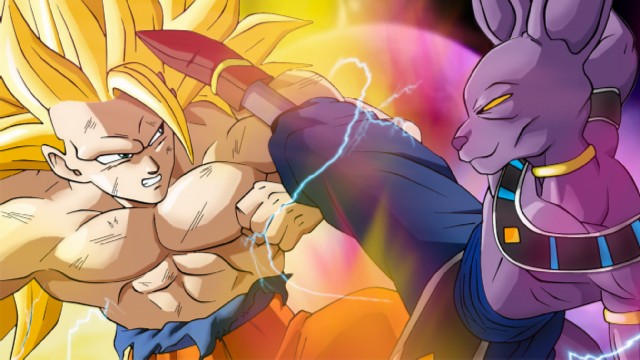
The story continues exactly where we left it: Son Goku has defeated the evil Majin Buu, and now spends his time training. Peace, as always, is meant to be short-lived, as the powerful God of Destruction, Beerus, suddenly awakens from his slumber. Beerus had a dream in which he battled a “Super Saiyan God”, an adversary finally worthy of him, and reaches Goku to see if it’s him the warrior he dreamt about. However, Goku is quickly vanquished by the overwhelming power of the God of Destruction who, disappointed, focuses his attention on Earth, where other Saiyans are gathered to celebrate Bulma’s birthday. Something must be done, to prevent the planet’s destruction…
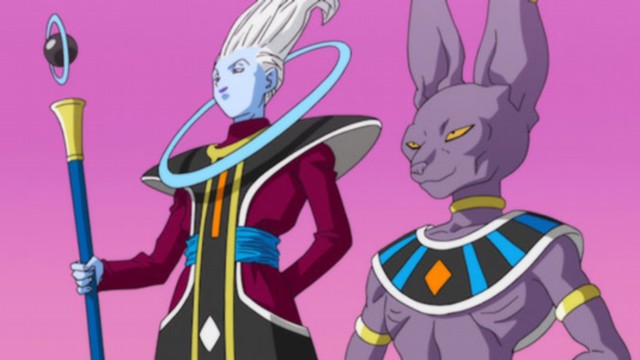
Toei chose veteran Masahiro Hosoda, who already worked on the original series, as director for this new chapter. They also gathered once again the original voice cast; the real surprise, cheering everyone up is the presence of Akira Toriyama himself, this time as art director. Compared to the other Dragon Ball movies, Battle of Gods wants to be an official sequel to Toriyama’s manga, with an ending hinting at a potential continuation of Goku’s adventures.
The story tries to make a distance from the usual pattern, mainly by introducing the hardly-classifiable character of Kōichi Yamadera‘s Beerus, a “villain” of his own kind, different from every other bad guy before him. I’m not just talking about his overwhelming power, but primarily about his attitude, which makes him an enjoyable coprotagonist; perhaps a little too violent but essentially neutral, since he is ultimately more interested in finding worthy opponents than in destroying planets and galaxies. The story consequently changed because of this, and in place of the usual long series of fights leading to the final clash, we have a long introduction that plays on the cross-references to the classic series (almost every main character from the manga/anime is seen, even Emperor Pilaf). There are quite a few humor attempts, but they are utterly ineffective, patologically childish and sometimes even embarassing, with some totally forgettable sequences (Vegeta‘s dance above all) which should have never made the cut.
Speaking of flaws, it’s also sugary and out of place the Saiyans’ “ring around the roses”, aimed to awaken the umpteenth latent power nobody has every heard of; even the final battle between Goku and Beerus feels endless and frankly boring. We must however appreciate the many attempts of renovation found in Dragon Ball Z Battle of Gods, along with the desire to change the rules of the game while mantaining the same spirit of an anime able to win the hearts of entire generations.