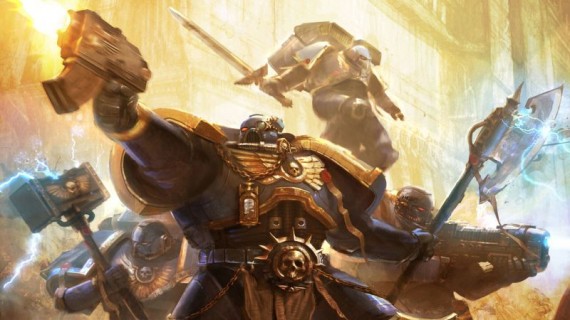
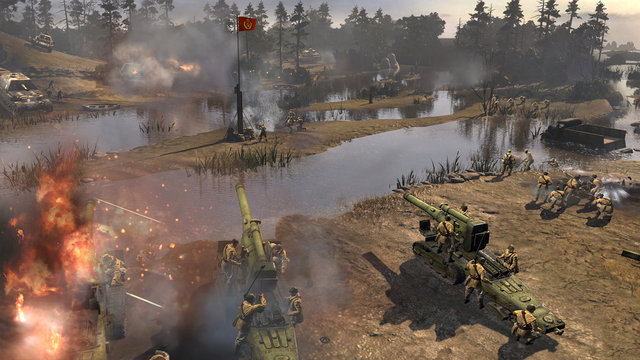
Before 2006, the world of real-time strategy (RTS) games boasted enjoyment mainly in the Total War and Command & Conquer series, while less noble productions tried to carve out space in the ranks of the genre. Newcomer Dawn of War was celebrated for a couple of years, receiving several awards from critics and audiences (StarCraft 2 still years away). These games drove the genre until 2006, the year in which Company of Heroes was first published.
Although featuring many similarities in strategy with Dawn of War, unlike the latter, Company of Heroes was able to catalyze and capitalize on the attention of the commanders keyboard, thanks to a cutting-edge technical sector and the innovative management of resources, tactics (and a fair amount of strategy). Seven years after its debut, it’s finally time for a true sequel: Company of Heroes 2, developed by Relic Entertainment but now published by SEGA, after THQ’s closure earlier this year.
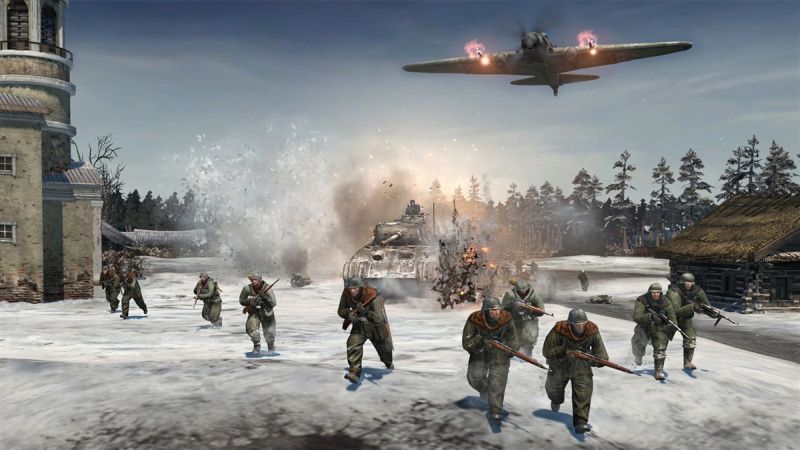
All the technical aspects of Company of Heroes 2 are managed by the third generation of the game engine Essence, which moved the first Company of Heroes and all following series expansions. For Company of Heroes 2, the development team has adopted Essence 3.0, and at first glance not much has changed. On closer inspection though, there are a large number of improvements in Relic’s latest effort.
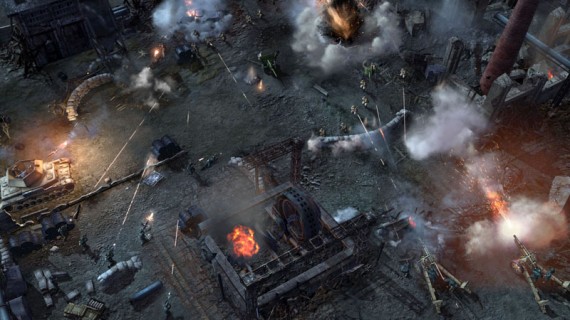
In terms of visual appearance, little has changed from the first Company of Heroes. If it weren’t for the ability to customize the appearance of units, I would say that visuals appear at similar levels seen in 2006. I must also remark that during the cut-scenes and in-game action, optimization leaves something to be desired, indicating perhaps a shortage of resources and too little time to carve it all for Relic. The expected improvements that should result from a gap between a game dated 2006 and one published in 2013 doesn’t seem very obvious. However, on a positive note, the soundstage and physics engine have seen significant improvements: thumbs-up especially for sound effects, carrying excellent impact and well produced. The music brings the right atmosphere, but I haven’t found that special track capable of breaking hearts and making me replay it in my mind.
Every RTS aspect has been improved in Company of Heroes 2, or even changed to make the gaming experience as pleasant as possible. The first noticeable change is the system for producing resources, which is significantly different compared to the first episode. In addition to capturing points of interest, the units can now customize which type of resource to generate at each point. In practice, it is possible to capture a resource generation point and choose to reinforce it with a fuel depot for bonus fuel sourcing, or with an ammunition dump to get an additional bonus yield of the corresponding resource.
The management of civil structures, to be used as the basis of maximum coverage and temporary reinforcements, is retained. However, the physical response to guns, flamethrowers and grenades has seen much improvement. For example, a wooden structure catches fire more easily than a stone one and realistically burns during the course of the game for a few minutes before only ashes remain. In addition to structures, the trees dotting certain maps can meet the same fate, which become collateral victims to the fire of our soldiers or tanks.
Training facilities for units have changed names, but not substance. The Soviets structures are; Field Regimental Headquarters, The Special Rifle Command, Kampaneya Support Weapon, Armor Mechanized Kampaneya, and Tankoviy Battalion Command, almost identical counterparts of the well known barracks, weapons support center, vehicle center, and tank lobby featured in the first Company of Heroes. Axis forces enjoy the Kampfgruppe Headquarters, a name given to the old Reich’s Wehrmacht Headquarters but which indicates the same type of structure: this can evolve up to three times, allowing players to train the best units in the third Reich army.
Like all other aspects of the game, even the combat system has been improved upon. The production costs are more visible and clear; power-ups - whether it be infantry or vehicles - can be passive (ie, valid for all units of the same type) or active and therefore can be purchased individually. Coverage points have been retained, indicated by icons of different color from red (no cover) to green (excellent coverage). The infantry can jump small obstacles or fences, even if the targeting system is a bit inaccurate and results in losing precious seconds.
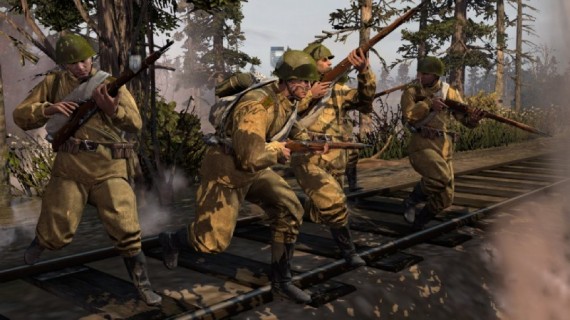
In the past, it was possible to take possession of MG42 machine guns or anti-tank guns left by opponents, but you can now take possession of tanks not overly damaged in battle. The Red Army may also enjoy the conscripts of Shtrafbats; the Soviet penal battalion ruled by ‘order 227′, which imposed a ban on unauthorized retreats at the cost of summary execution. Players can see it in action when daring to give orders to retreat earlier than planned or prior to authorization of the general staff. The management of the tanks has improved, allowing players to impose the reverse gear for a strategic retreat without the risk of showing the side and rear to enemy artillery.
The TruSight, already experienced in action during the Beta stages, gives the impression of being able to actually see what is visible by the troops under our control. This pushes us to hold one or more units on the lookout to avoid the enemies around us. The dynamic weather feature (that turns a clear day to snowstorms or downpours) goes well with the TruSight, questioning the effective visibility of our armies and pushing us to reconsider our tactics. In the snowy maps and during missions set in winter, blizzards could have devastating effects on our infantry troops, especially during the infamous “blizzard” when icy storms rage for short terms with great intensity. On those occasions, the only way to avoid losing valuable units is to protect them in a safe structure or near a campfire. The latter, despite being a great remedy against the cold, exposes units to enemy infantry’s sight with expected consequences.
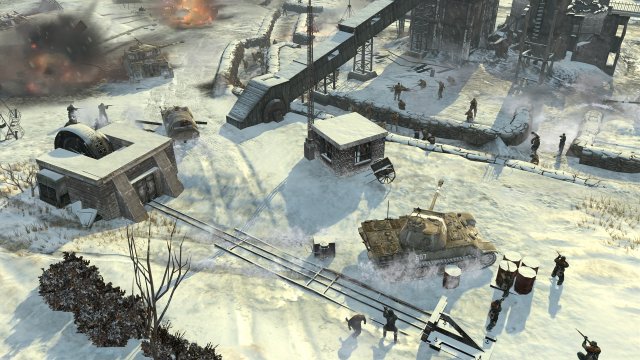
Company of Heroes 2 takes everything previously well done in Company of Heroes, then expands and improves upon it. However, even though on the surface the gameplay and sound quality appear hard to beat, the technical aspects are certainly no miracle, since the graphics engine is rough and imperfect (nothing that can’t be improved with a decent correction patch). Online modes - the showpiece of Company of Heroes which attracts new players even after seven years - are not in line with the quantity and quality of gameplay experience guaranteed by solitary mode.
Arguably, in the years to follow, there will be expansions with new factions to control, which will expand the offerings of Company of Heroes 2, but at present this game is still a bit hard and raw. It is more than just a new game, being a monumental upgrade from the basic Company of Heroes and a leader in the RTS genre, but it certainly is nothing revolutionary.
Still, let me be clear in this Company of Heros 2 review: the game carves out its own space and delivers on the most important feature of all, gameplay. I would recommend it to the die-hard fans who can turn a blind eye to a few minor technical smudges.