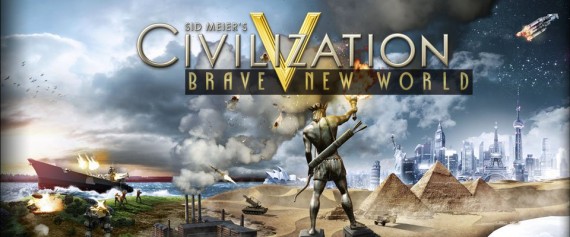
The story seems to be cyclical: just when it seemed that Civilization V had run its course, Sid Meier announces to the world a completely new expansion for his creation, maybe the last one before Firaxis begins to focus on an entirely new chapter of the series. So, after the first DLC, Gods & Kings and some add-on packs, here we are ready to examine every single inch in our Civilization V Brave New World review.
Upon starting the game and going to the screen to customize the match, I noticed some of the new features of this DLC: new civilizations (nine to be exact), including Venice, Brasil, Zulu, Portugal, Indonesia, Poland, Shoshone, Morocco and Assyria, all led by a proper chief with a distinct personality. Some of these civilizations are completely new to Firaxis’ series, while others have come back at the request of a huge number of fans.
The greatest thing as always in Civilization is that every single leader and their people are deeply characterized, with a great historic knowledge and precision. For example, Venice is a population of great traders as opposed to Assyria, who are mainly a warrior people. It doesn’t matter which of these you choose to play, every single civilization guarantees hours upon hours of custom approaches to the game, although of course you might want to try them all to pinpoint the civilization that suits your play style the best.
As usual, with every DLC released by Firaxis, players also get to experience some extra scenarios. The first is set during the American Civil War, putting the player in the position of choosing sides with the objective to conquer the enemy capital. In the second new scenario you take part in the colonization of Africa and can join a European nation ready to find a wealth of expensive resources in the continent, or a native tribe seeking to preserve his land from the invaders, or even a side nation observing the situation from the outside which later chooses to aid one of the belligerents.
Trading is at the forefront of the new features introduced in Civilization V: Brave New World. The biggest innovation is that of caravans. It’s now possible to open new trade routes by land and sea with other civilizations and with city-states. This ensures not only more income, but also a boost to prestige and international influence.
On these routes, it’s possible to propagate culture and politics which are important for tourism and for the three new figures that you can spend culture points on (artists, writers and musicians), whose works have to be exposed inside dedicated buildings, the same buildings that ultimately allow for cultural victory. There are also two new choices in politics, aesthetics and archaeology. They favor play styles based on culture, as the three ideologies, order, freedom and autocracy, available in the modern era, allow the player to choose which type of victory they want to pursue.
Civilization V is going to end its life cycle in the next few years, but a DLC like Brave New World is tangible proof that Firaxis still wants to support its project until the end. Brave New World is a healthy mix of great ideas and good content, although some new features only touch on some aspects of the whole of Civilization V multifaceted complexity. The improvements in cultural, diplomatic and economic victories bring Firaxis’s game one step closer to perfection. If bought with all DLC however, having to spend almost 30€ or £30 for some add-ons might leave you wondering if it’s best to wait for the inevitable complete edition.
For those who loved Civilization V, Brave New World is a must buy that will improve their collection, prompting them to spend even more hours telling themselves “just another turn and then I’ll stop”.