
Ryse: Son of Rome Review (PC)
After a lukewarm reception on Xbox One, where it played the role of launch title, Ryse: Son of Rome lands now on PC shores. Crytek, traditionally a PC developer, is now able to show the game at its fullest graphics potential thanks to the additional power; the result is, quite frankly, unrivalled.
The game already won this year’s Siggraph Award for Best Realtime Graphics for the Xbox One version. Here, though, you will be treated with a visual splendor that could honestly be mistaken for CG of just a few years ago. Even without any kind of supersampling, at 1920×1200 (FullHD with 16:10 aspect ratio), there is virtually no trace of aliasing; textures are highly detailed and visual effects such as fire and reflections are fantastic.
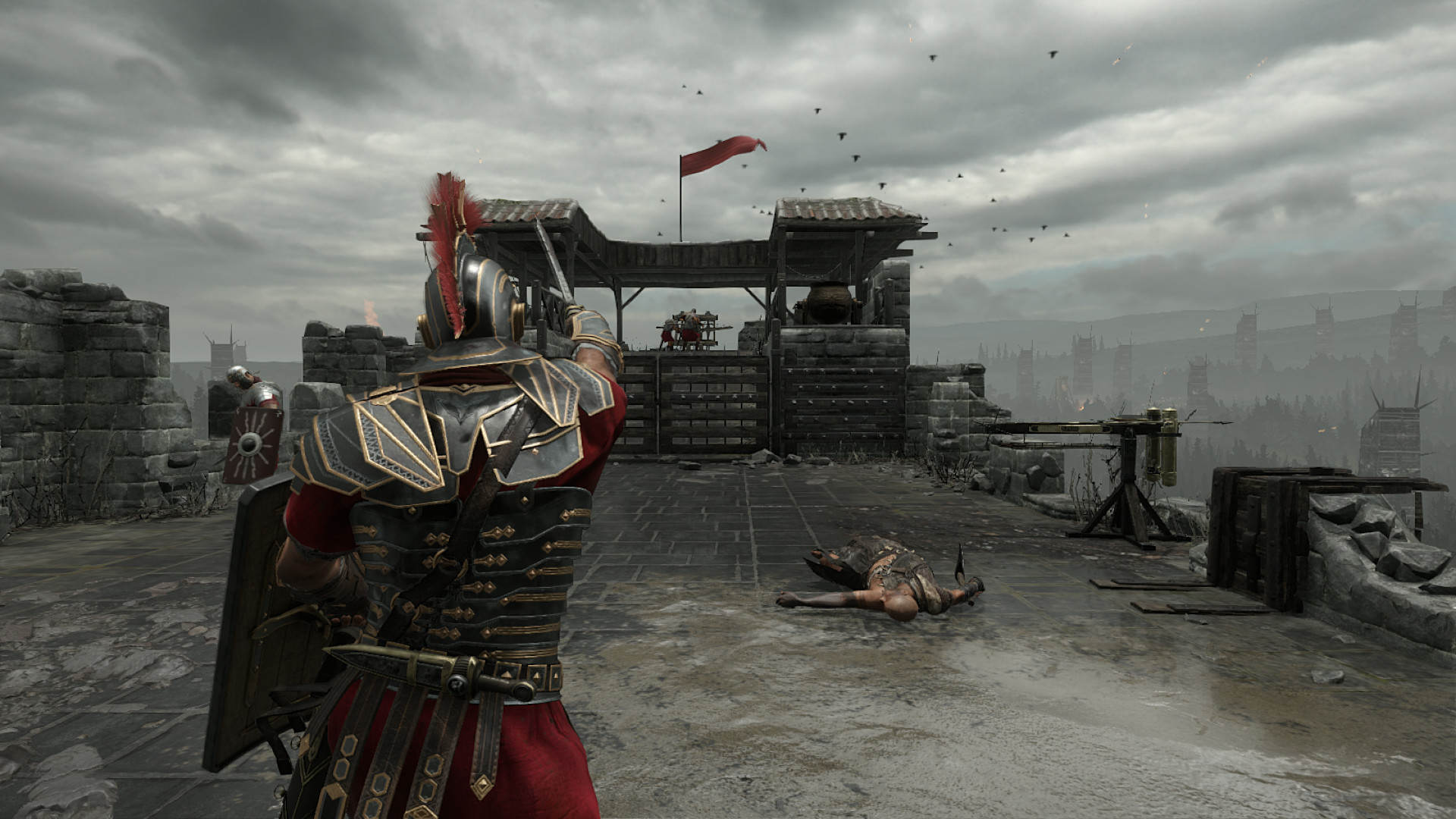
Vegetation is also awesome, as usual for a CryEngine game, but the single most impressive graphics element is easily identified in the incredibly realistic portrayal of materials such as metal (on armors and weapons), stone and marble (on buildings). It is very hard to pinpoint which level looks better than the others, but certainly when you get into the Coliseum teeming with shouting people it’s hard not to be amazed.
During my playthrough I encountered very few slowdowns, mostly in the level where the Romans are escaping York. Other than that, the game ran very smoothly on i5 2500K and 780Ti hardware, which is more than can be said for other, less taxing games; once again, Crytek proved its technical mastery.
Unfortunately, the rest of the game doesn’t really compare to the visual treat that is Ryse: Son of Rome. The campaign will have you play as Marius, a Roman legionnaire who is betrayed by the Emperor and his sons; there are also higher powers (the Gods) involved, which fits the historic period, but in the end it’s all just too stereotypical and predictable to be truly engaging. Clearly, they have taken inspiration from Gladiator, which in itself isn’t a bad idea at all, if only they added some twists here and there.
The campaign is also very short for action/adventure standards, clocking between six and seven hours. Unfortunately, this issue is worsened by the fact that there is no true reason to replay the campaign; while there are some collectibles scattered around, everything is very linear and there is no player choice at all.
Moreover, there is very little variation in gameplay. You will be fighting all the time and with no chance of a stealth approach; sometimes Marius can use a ballista or throw some lances to far away enemies, but that’s it.
The bulk of the game will have you fighting in melee combat. Slashing Barbarians is indeed quite fun, for Crytek nailed that elusive but essential feeling of weight carried by hits, which makes combat visceral and satisfying. However, there are some flaws here, such as the pacing being constantly broken by Quick Time Events executions. These are important as they can help you gain more XP, some health/focus back or a damage boost, depending on the perk you’ve chosen (it can be switched in real time with the directional pad); however, once you activate an execution time will stop, meaning that no enemy will be able to hit you until it’s finished. Also, hitting the right buttons during the QTE isn’t even required in order to kill your enemy, just to get more points out of your kill.
Perhaps the real savior for Ryse: Son of Rome in terms of value is the cooperative mode. Here you will be able to customize your character with different skins and most importantly, earn experience through the gladiatorial matches; this can be spent afterwards to buy so-called “booster packs”, which contain items and consumables. The interesting thing is that Crytek added an additional mechanic: an “Entertainment” meter for the crowd, which maximizes experience earned based on how fast and spectacular you are in annihilating your foes.
In this mode there are different kinds of challenges, such as freeing Roman prisoners, destroying catapults, and obviously obliterating all the enemy waves. There are three flavors of multiplayer, with the most basic one being Survival, by all intents and purposes a Horde mode which teases the player to last as long as possible; then there’s Arena, where the environment changes dynamically in a cool way, and ultimately Round to Round, where you can choose the environment yourselves. Playing solo is an option too, though I wouldn’t recommend it if you have the chance to enter the Coliseum with a friend of yours.
Maps are all themed after exotic locations or legendary battles, as it was usual in Rome. The PC version has all the DLCs included, with five additional character skins and twenty more maps spread over the modes; as a final note, the soundtrack is great and so are sounds in general, which is quite important in a game like this.